
- You bring
- Current product documents, a drawing or photos, and the question to answer.
- You receive
- A scoped illustration with agreed web and print exports.
- We review
- Labels, relationships and technical content with your nominated reviewer.
TECHNICAL ILLUSTRATION & ANIMATION
FOR BUILDING PRODUCTS
Make the
complex
make sense.
Diagrams, cutaways and short animations for building-product manufacturers, contractors and inspection-equipment makers.
Built from your technical documents. Reviewed with your nominated specialist before release.
Founded by Kevin Ly. Grounded in waterproofing practice.
STUDY 001 / OPENING UP THE DETAIL
M / 001
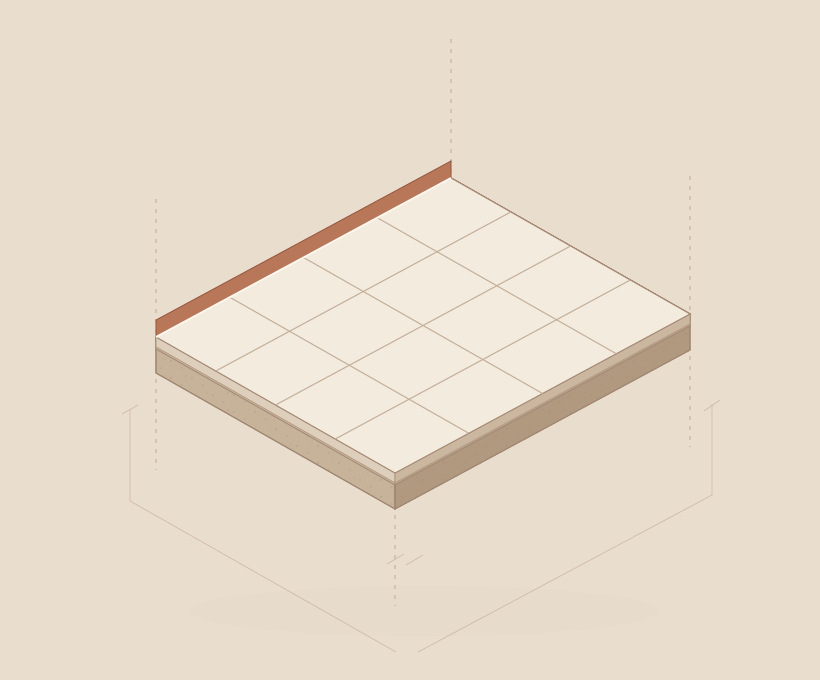
- 01 Surface finish
- 02 Protection
- 03 Membrane
- 04 Substrate
Which layer will the finish hide?Explore the relationship between the layers. Concept only · Not an installation detail.
For the people who
make things work.
ManufacturersBuilding productsContractors & consultantsInspection technology
SELECTED WORK / A FINISHED EXPLAINER
A hidden detail.
A visible reason.
Who checks the waterproofing before the tiles go on?
A finished animation from Kevin’s work for his own practice, Certified Waterproofing. Published in October 2026.
- The question
- Why does the timing of an inspection matter when each layer covers the last?
- The explanation
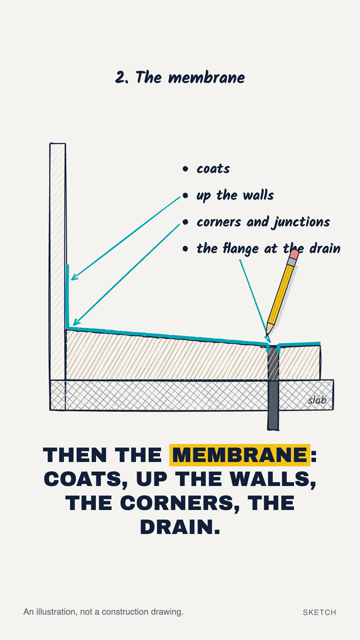
- A section drawing builds up one layer at a time. Short captions connect what the viewer sees with the reason to check it before it is covered.
- The finished piece
- A 41-second portrait animation for social viewing, with captions that carry the explanation without a voiceover.
Created for Kevin’s own practice, before Motren’s launch. Shown as a work sample, not a third-party client commission. The film is an illustration, not a construction drawing.
Read the explanation
The animation shows one example of a bathroom floor, with a liquid membrane over a sloping screed. The floor falls to the drain, the membrane covers it, and a water test may take place before tiles cover the work.
The people who can see it at this stage include the builder and trades, the building certifier where applicable, and an independent inspector booked before it is covered. The final point: once screed or tiles cover the waterproofing, it is hidden from view. Get it checked before it is covered.
01 / THREE WAYS TO START
One question.
A useful explanation.
Start with the detail your customers keep asking about. We’ll choose a format together, then agree the scope, price, review rounds and timing in a written quote.
- You bring
- Product instructions, access or usable footage, and technical input.
- You receive
- A focused demonstration using footage, diagrams or animation, as scoped.
- We review
- What the product does, what its output means and the limits to explain.
- You bring
- The current procedure or instructions, key steps and intended audience.
- You receive
- A storyboard and agreed animation or step-by-step illustrations.
- We review
- The order, important interfaces and qualifications before final delivery.
The three illustrations above are self-initiated concepts. Open an image to explore its communication approach. For a finished example, see the waterproofing film and case study.
02 / WHERE THE WORK HELPS
Built around
your subject.
Waterproofing, building products and inspection technology are our starting focus. The first question is what your audience needs to understand.
How a project comes togetherShow how your system fits together.
Explain a hidden interface, a product application or an installation sequence. Scope visuals for product pages, presentations and distributor education.
Diagrams & cutawaysMake the method easier to follow.
Explain a proposed sequence, illustrate a scope or turn project evidence into a technical case study. Tender visuals are scoped around the question your submission needs to answer.
Connect the instrument to the insight.
Show what an inspection tool measures, how it is used and what needs interpretation. Build a useful introduction for customers and sales teams.
Product demonstrations03 / FROM DETAIL TO UNDERSTANDING
First, understand it.
Then, explain it.
Good technical communication starts with good questions.
01
Get close to the subject.
Who needs to understand this? What keeps getting misunderstood? I work through your source material with you, then agree the deliverables, review process, price and timing.
THE OUTCOME / A BRIEF & QUOTE02
Find the clearest view.
Review a working diagram or storyboard before detailed production. Check the labels, sequence and qualifications while changes are still straightforward.
THE OUTCOME / A REVIEWED DIRECTION03
Review it. Put it to work.
Review the technical content with your nominated specialist, refine the details, then prepare the approved assets for the places they’ll be used.
THE OUTCOME / USEFUL, APPROVED ASSETSIN THE WORKOne film. A source check, a seven-beat plan and a clearer way to show what becomes hidden.
See the decisions behind the film04 / THE STUDIO
A practical
point of view.
A curious mind.
KEVIN LY / FOUNDER & PRACTITIONER
The best questions often
come from the field.
I’m Kevin, the founder of Motren. Alongside the studio, I run Certified Waterproofing, working in waterproofing inspections and technical reporting in Sydney.
That work puts me close to the details people need to understand: how layers meet, what an inspection can reveal, and what becomes hidden as a job progresses. I bring those questions into the diagrams and animations I make.
For a commissioned piece, I work from your current technical documents and agree who will review the content before release. My starting focus is waterproofing, building products and inspection technology.
Visit my waterproofing practiceUnderstand the detail.
Make it useful.
Keep learning.
05 / THE VISUAL LIBRARY
All visual notesLook closer.
Understand more.
Short notes on making technical subjects understandable, using our own drawings and finished work.
06 / BEFORE WE BEGIN
A few useful
answers.
What do I need to send?
A product link, drawing, photos or a few lines about the problem is enough to begin. Tell me who needs to understand it and where the explanation will be used. We’ll identify the current technical documents and reviewer needed for the agreed scope.
Do I need a diagram, a video or an animation?
We’ll choose from the question you need to answer. A still can explain a relationship; a sequence can show what changes; footage can demonstrate a real tool. A project may combine them. You don’t need to choose before getting in touch.
How is the technical content checked?
We agree the source documents, versions and nominated reviewer at the start. A working drawing or storyboard is checked before detailed production, with a final content review before release. The visual supports your technical documentation; technical approval remains with the agreed reviewer.
What affects the price and schedule?
The condition of the source material, number of unique views or scenes, technical detail, runtime, review rounds and output formats all affect the work. Product variants, voiceover and urgent deadlines can add scope. Price and timing are confirmed in a written quote before production.
Which files will I receive?
The quote lists the final files and intended uses: for example, web images, a print-ready PDF, a captioned MP4 or presentation images. Editable project files, extra aspect ratios and further adaptations are agreed explicitly rather than assumed.
Can we update or reuse the work later?
Yes—tell me about likely product variants, channels and future updates when we scope the first piece. Later changes are quoted against the material that has changed, including any technical review needed. We agree reuse and file handover as part of the project.
Will my project appear on this website?
Public portfolio use is agreed with you. Let me know about confidential information and any restrictions before sharing source material. We can discuss a suitable way to work with it.
LET’S MAKE SOMETHING CLEAR.
What needs
explaining?
A product link, marked-up drawing or a few lines about the problem is enough to start. Tell me who it is for and where it will be used.
Email Kevin kevin@certifiedwaterproofing.com.auNext: clarify the subject, recommend a format and prepare a written scope and quote.